Supporting young women through puberty and change
Published: March 10, 2026
Living in an Oranga Tamariki house in Northland, Aroha* hadn’t had anybody talk to her about a period and what it was. So when it arrived, she felt scared and alone.
When Aroha* got her first period at 9 years old, she thought she was dying.
Oranga Tamariki Psychologist Cindy Scholtz said most of her clients are between the ages of 7 and 15.
In a short space of time, 2 young girls, both currently 13 years old, told her they thought they were dying when they got their first period at age 9.
Scholtz said:
As we built rapport and the girls got to know me, we talked about their biggest fears.
Both girls from different homes shared they thought they were dying when they got their first period. They were far from family and friends at the time and that was one of the scariest things that ever happened to them.
Both of them were in Oranga Tamariki care when they got their periods and didn’t tell anyone, and they were in between schools at the time too.
One of these young girls has been moved so many times, but it was something she brought up more than once in our sessions.
One day I asked her what she wished she’d known when she was 9. She paused for a moment and said, “it would have been nice if an adult had told me about these things and maybe given me some chocolate.”
Scholtz said she went and spoke to a few social workers and some of them didn’t even realise that girls as young as 9 could get their periods.
Trauma leads to early puberty
New research shows that girls who go through traumatic experiences in childhood often start their periods at a younger age.
A 2025 study published in the Journal of Adolescent Health has found that girls who had Adverse Childhood Experiences (known as ACEs) such as abuse, neglect, or family problems were more likely to begin puberty early.
In other words, the more difficult experiences a girl had, the earlier her period tended to start.
Taking action to create period packs
After talking to a Youth Worker in her office, Gypsy Luck, they decided to do something about this. Scholtz said:
We looked online to see if we could get some period undies and things donated to us and almost every website I looked at said you could only apply for free samples if you were a school.
So, I contacted the Bald Angels charity and sent them an email explaining the story.
Within 2 days Thérèse contacted me and said yes, they do something similar for our wāhine up North who are pretty isolated, and they are willing to donate items for us.
We also had Debbie from Foster Hope Charitable Trust who donated 'Girl Stuff' books, which contain information for girls and teens about puberty, emotions, relationships, and social issues.
We wanted to make 14 packs as we had 14 girls in and out of the home, so we went and bought items and put them together.
There is a QR code we put on the Kitkat that goes in the pack that takes them to a website, Kotex, which has cool videos of teenagers talking about periods and body changes.
In the packs for the younger girls there are period undies, chocolate, books, heat packs, towels, face clothes, toothpaste, toothbrush, soap, deodorant, pads and hand sanitisers.
The older girl packs have the same items, but it also includes tampons.
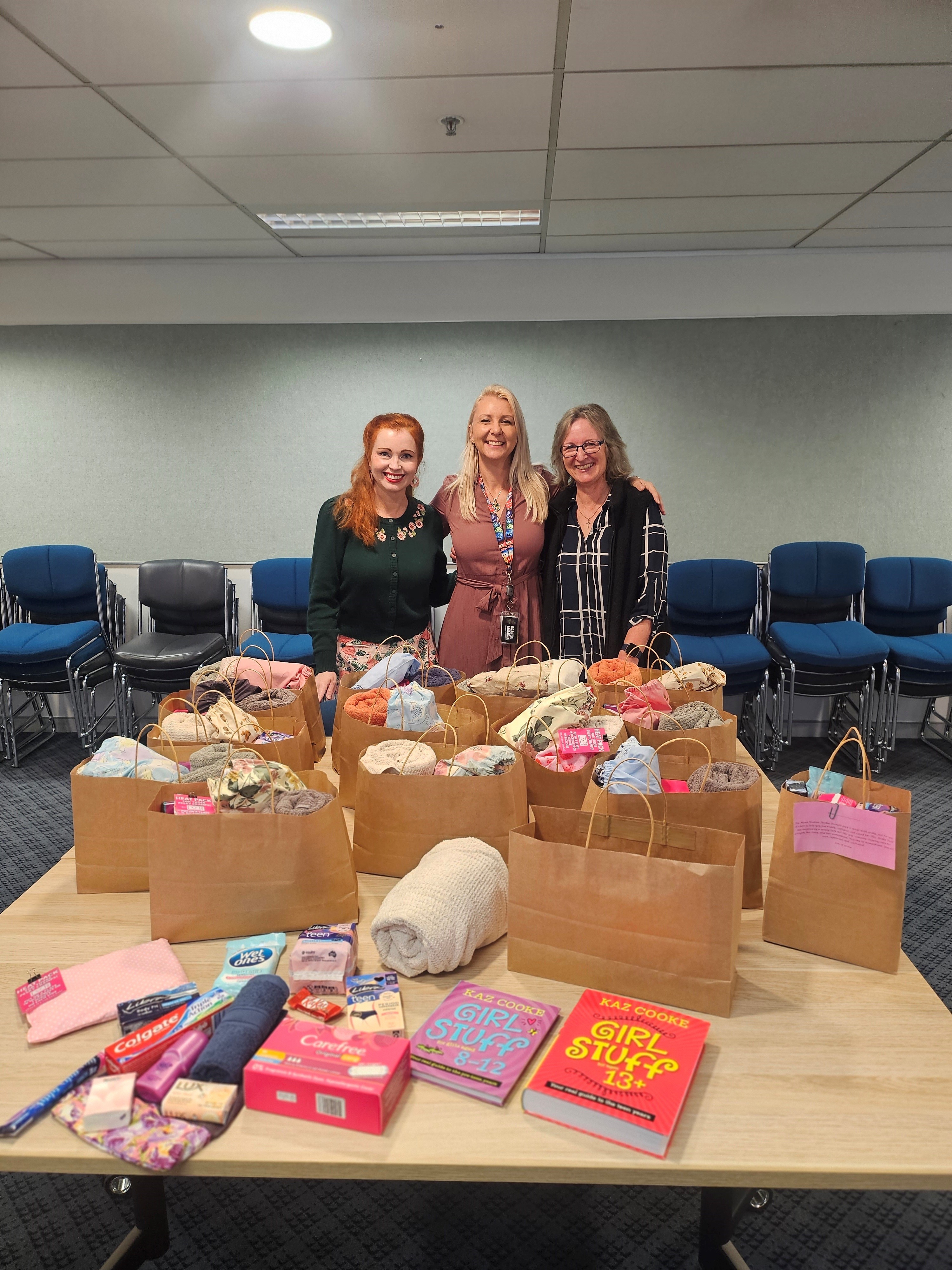
The packs are called Mana Wahine Aroha Strength Packs, as Scholtz called the first young girl she worked with on the project Aroha in public to protect her identity.
“Her courage in sharing her story and her thoughtful reflection has helped shape this work."
Aroha’s experience has not only empowered her but is now helping shape a better, more compassionate response for others in care.
Cindy Scholtz , Oranga Tamariki Psychologist
At the moment, Scholtz is focusing on care homes near Whangārei, but she said the dream would be to have the packs available through all the Oranga Tamariki homes.
“I would love that each girl who arrives at the care home between 9 and 13 will be issued these packs and the older girls will also get their packs.”
Scholtz is also trying to create packs for the boys in care homes, so she’s started to think about what they can include in those.
Aroha's name has been changed to protect her privacy.